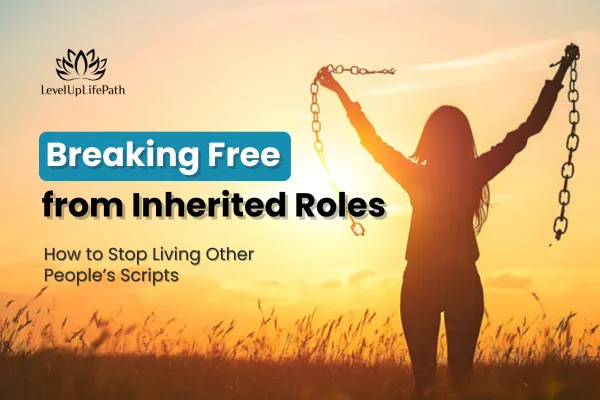
Breaking Free from Inherited Roles: How to Stop Living Other People’s Scripts
As soon as you’re born, you’re given a script shaped by culture, family, religion, and society before you can make your own choices. You’re shown what success means, who to marry, what to believe, and how to act. At first, it all feels normal and safe. But eventually, you might notice your life doesn’t feel like it’s truly yours. You realize you’ve been acting instead of really living.
Inherited roles shape your identity so much that you might forget you ever had a choice. Breaking free isn’t about rebelling; it’s about self-respect. It’s about remembering who you were before the world told you who to be.
The Weight of Cultural Conditioning
In communities where identity is shaped by the group, cultural conditioning is strong. You learn that fitting in means following traditions, meeting family expectations, and sticking to social norms.
It often starts in small ways. You get praised for fitting in, not for being curious. You’re told that asking questions is disrespectful. So you learn to quiet your instincts to keep the peace, but that silence can turn into resentment.
Cultural conditioning can make you mix up duty with destiny. You might meet everyone’s expectations and still feel empty because you’re living a version of success that doesn’t feel right for you.
Freedom isn’t about turning your back on your culture. It’s about finding a way to stay connected to your roots without feeling trapped. You can respect your background without letting it hold you back.
Inherited Beliefs: The Invisible Chains
Most of what holds us back isn’t something we can see or touch; it’s the beliefs we inherit. Ideas like “Money is hard to make,” “Good people don’t argue,” or “Sacrifice equals love” aren’t universal truths. They’re old mindsets passed down that shape how you see yourself and what you think you deserve.

Inherited beliefs get passed down through families like heirlooms. They may come from love, but they’re often rooted in fear. If you accept them without question, you end up carrying emotional burdens that aren’t really yours.
Begin to question these beliefs. When you hesitate to change, ask yourself whose voice you’re hearing. Whose approval are you still seeking? You start to feel free when you separate your own beliefs from those you inherited.
You can respect your ancestors and still move beyond their fears.
Emotional Freedom: Detaching Without Disrespect
Breaking free doesn’t mean you have to end relationships. Emotional freedom is about loving others without losing who you are.
You can respect your parents and still pick a different career. You can care for your family and still set boundaries. You can value tradition without giving up your individuality.
Freedom isn’t about rejecting everything. It’s about adjusting your life and choosing what you want to keep and what you want to let go.
Letting go of inherited roles can make you feel guilty. Some people might call you selfish or say you’re “too different.” But really, you’re just being more honest, and honesty is one of the greatest forms of respect.
When you stop pretending, your relationships become more genuine. People might resist your changes at first, but over time, they’ll see that being authentic brings peace, not conflict.
Personal Authenticity: Remembering Who You Are
Being authentic means remembering who you were before you learned to fit in.
It’s not easy. When you let go of old identities, you might lose praise and approval. But you gain something better, a sense of being true to yourself.
To live authentically:
Stop performing for validation.
Speak the truth even when it’s inconvenient.
Choose what aligns with your values, not what appeases others.
Accept that not everyone will understand your choices, and that’s okay.
Authenticity isn’t about being loud. It’s a quiet confidence. It means you can walk into a room without feeling the need to hide or prove yourself.

Being authentic might mean some people misunderstand you, but the reward is feeling at peace with yourself.
The Fear of Disappointing Others
The hardest part of changing isn’t the change itself, it’s the fear of disappointing others.
You might worry that stepping away is a kind of betrayal. But the real betrayal is giving up on yourself just to keep others comfortable.
When you move beyond your old roles, some people might take it personally. They’ll say you’ve changed, and you have. That’s the whole point. You weren’t meant to live the same story forever.
The right people won’t ask you to stay the same. They’ll celebrate your growth because it shows courage, not disloyalty.
Identity Transformation: Writing a New Script
When you let go of other people’s expectations, what remains is your own truth, sometimes raw and uncertain, but real. That’s where real change begins.

To rebuild authentically:
Pause and reflect. What roles do you play daily? Which feels heavy?
Name the expectations. Who defined them, you or someone else?
Redefine success. What does fulfillment look like without external validation?
Try one small act of change. Say no instead of always saying yes. Choose quiet instead of forced politeness. Choose rest instead of always trying to prove yourself.
You’re not lost, you’re rewriting your story. Change can feel messy because you’re letting go of an identity that wasn’t really yours. But after the confusion, things become clearer.
Reclaiming Your Power
Each time you choose to be authentic instead of seeking approval, you take back your power. Every time you speak your truth instead of staying silent, you strengthen your sense of self.
Rebuilding your identity doesn’t erase your past; it gives it new meaning. You turn what once held you back into lessons that help you move forward.
Power isn’t about controlling others. It’s about choosing the direction of your own life and making it feel like it truly belongs to you.
The Courage to Stand Alone
There’s often a lonely period between who you were and who you’re becoming. Many people give up during this uncomfortable time because they feel misunderstood.
But being alone is where authenticity grows. It’s when you stop looking for permission and start trusting your own instincts.
Standing alone doesn’t mean being isolated. It means trusting yourself enough to keep going until you meet people who value you for who you are, not for how you act.

If choosing alignment over approval and living by your own truth speaks to you, these themes are explored more deeply in The Unfollowed Path, a grounded guide to breaking free from inherited narratives and creating a life that feels honest, sovereign, and fully your own.
Integration: Living Beyond the Script
Freedom isn’t something you just find; it’s something you practice. After you break free, you need to build new habits to keep it going.
Try this:
Start your mornings with self-connection. A few minutes of silence, journaling, or prayer anchors your truth before the world’s noise arrives.
Spend time with people who reflect your potential, not those who judge you for your past.
Take time each week to check in with yourself. Are your choices based on what feels right for you, or just on what you think you should do?
Celebrate small acts of defiance. Every time you say no with honesty, you reinforce your liberation.
Breaking old patterns isn’t something you do just once; it’s a lifelong journey back to yourself.
You don’t have to be the version of yourself that fits into everyone else’s expectations. You owe it to yourself to live honestly, bravely, and freely.
Breaking free from inherited roles isn’t about turning away from your roots; it’s about living in your own truth. You can love your culture and still find your own voice. You can honor your family and still choose your own path.
Stop living by other people’s scripts. Write your own story, one that feels like home and lets your voice be truly yours, not just an echo of others’ expectations.
When you start living your own story, you stop just getting by and begin to feel whole.

If you’d like to dive deeper into mindset, resilience, and self-development, you can explore our full collection of books and bundles on the Ebooks Overview page.